
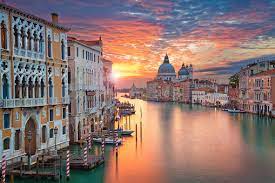
Welcome to Metaversse Expedition& Consultng Service, We are in the business of gaining your trust & connect you to the best of places throughout the world. Thank you for your interest in our services, we are eager to serve to the best of our ability.
Guided Orientation Tour of Paris, Amsterdam, Orientation tour of Cologne, Brussels, Frankfurt, Interlaken & Lucerne, Eiffel Tower level 2, Seine River Cruise, Canal Cruise Ride Amsterdam, Visit to windmill village Zaanse Schans, Cologne Boat Ride, Visit to Black Forest, Visit to Rhine Falls- No Boat ride Included, Excursion to Mt. Titlis
Cultural Heritage
Europe’s almost unmanageable wealth of attractions is its biggest single draw: the birthplace of democracy in Athens, the Renaissance art of Florence, the graceful canals of Venice, the Napoleonic splendour of Paris, and the multilayered historical and cultural canvas of London. Less obvious but no less impressive attractions include Moorish palaces in Andalucía, the fascinating East-meets-West brew of İstanbul in Turkey, the majesty of meticulously restored imperial palaces in Russia’s former capital St Petersburg and the ongoing project of Gaudí’s La Sagrada Família in Barcelona.
Glorious Scenery
Despite its population density Europe maintains spectacular natural scenery: rugged Scottish Highlands with glens and lochs; Norway’s fabulous fjords, seemingly chipped to jagged perfection by giants; the vine-raked valleys of the Loire; and the steppe-like plains of central Spain. For beaches, take a circuit of the Mediterranean’s northern coast where beach holidays were practically invented. Or strike out to lesser-known yet beautiful coastal regions such as the Baltic and Black Seas. Mountain lovers should head to the Alps: they march across central Europe taking in France, Switzerland, Austria, northern Italy and tiny Liechtenstein.
Raise a Glass
Cheers! Salud! Prost! Cin cin! À votre santé! Europe has some of the best nightlife in the world. Globally famous DJs keep the party going in London, Berlin and Paris, all of which also offer top-class entertainment, especially theatre and live music. Other key locations for high-energy nightlife include Moscow, Belgrade, Budapest and Madrid, while those hankering for something cosier can add Dublin’s pubs or Vienna’s cafes to their itinerary. Continue to party on the continent’s streets at a multiplicity of festivals, from city parades attended by thousands to concerts in an ancient amphitheatre.
Magnificent Menus
Once you’ve ticked off the great museums, panoramic vistas and energetic nightlife, what’s left? A chance to indulge in a culinary adventure to beat all others. Who wouldn’t want to snack on pizza in Naples, souvlaki in Santorini or even haggis in Scotland? But did you also know that Britain has some of the best Indian restaurants in the world; that Turkey’s doner kebab is a key part of contemporary German food culture; and that in the Netherlands you can gorge on an Indonesian rijsttafel (rice table)? Europe’s diversity and global reach is its trump card.
Explore Europe top attractions
Vatican Museums Italy
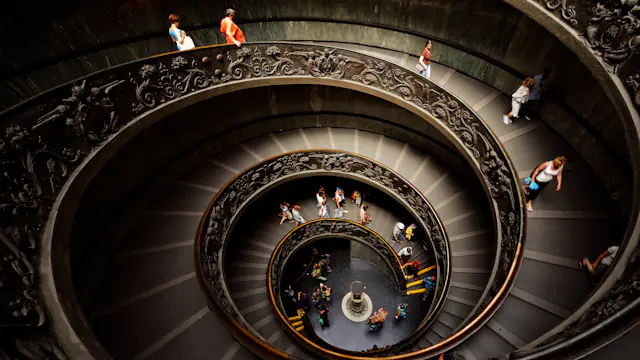
Why you should go
Founded by Pope Julius II in the early 16th century and enlarged by successive pontiffs, the Vatican Museums boast one of the world’s greatest art collections. Exhibits, which are displayed along about 4 miles of halls and corridors, range from Egyptian mummies and Etruscan bronzes to ancient busts, old masters and modern paintings. Highlights include the spectacular collection of classical statuary in the Museo Pio-Clementino, a suite of rooms frescoed by Raphael, and the Michelangelo-painted Sistine Chapel.
Housing the museums are the lavishly decorated halls and galleries of the Palazzo Apostolico Vaticano. This vast 13.6-acre complex consists of two palaces – the original Vatican palace (nearer to St Peter’s) and the 15th-century Palazzetto di Belvedere – joined by two long galleries. On the inside are three courtyards: the Cortile della Pigna, the Cortile della Biblioteca and, to the south, the Cortile del Belvedere. You’ll never cover it all in one day, so it pays to be selective.
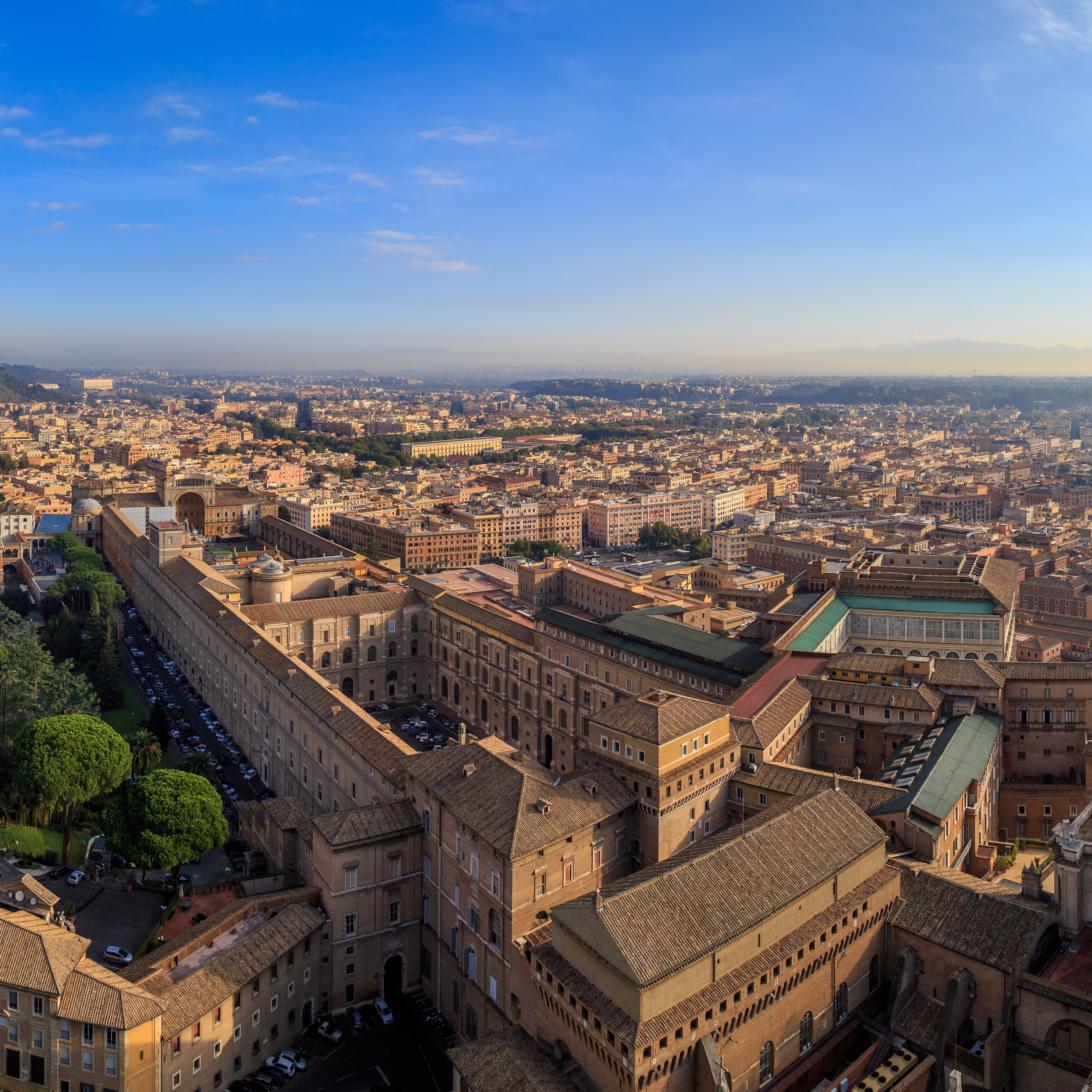
Museo Chiaramonti and Braccio Nuovo
The Museo Chiaramonti is effectively the long corridor that runs down the east side of the Belvedere Palace. Its walls are lined with thousands of statues and busts representing everything from immortal gods to playful cherubs and ugly Roman patricians. Near the end of the hall, off to the right, is the Braccio Nuovo (New Wing), which contains a famous statue of the Nile as a reclining god covered by 16 babies.
Museo Gregoriano Egizio (Egyptian Museum)
Founded by Gregory XVI in 1839, this museum contains pieces taken from Egypt in Roman times. Fascinating exhibits include a fragmented statue of Ramses II on his throne, vividly painted sarcophagi dating from around 1000 BCE, and a macabre mummy.
Museo Gregoriano Etrusco
At the top of the 18th-century Simonetti staircase, the Museo Gregoriano Etrusco contains artifacts unearthed in the Etruscan tombs of northern Lazio, as well as a superb collection of vases and Roman antiquities. Of particular interest is the Marte di Todi (Mars of Todi), a black bronze of a warrior dating from the late 5th century BCE, located in Room III.
Museo Pio-Clementino
This stunning museum contains some of the Vatican Museums’ finest classical statuary, including the peerless Apollo Belvedere and the 1st-century Laocoön, both in the Cortile Ottagono (Octagonal Courtyard). Before you go into the courtyard, take a moment to admire the 1st-century Apoxyomenos, one of the earliest known sculptures to depict a figure with a raised arm.
To the left as you enter the courtyard, the Apollo Belvedere is a 2nd-century Roman copy of a 4th-century-BCE Greek bronze. A beautifully proportioned representation of the sun god Apollo, it’s considered one of the great masterpieces of classical sculpture. Nearby, the Laocoön depicts a muscular Trojan priest and his two sons in mortal struggle with two sea serpents.
Back inside, the Sala degli Animali is filled with sculpted creatures and some magnificent 4th-century mosaics. Continuing on, you come to the Sala delle Muse, centered on the Torso Belvedere, another of the museum’s must-sees. A fragment of a muscular 1st-century-BCE Greek sculpture, this was found in Campo de’ Fiori and used by Michelangelo as a model for his ignudi (male nudes) in the Sistine Chapel.
The next room, the Sala Rotonda, contains a number of colossal statues, including a gilded-bronze Ercole (Hercules), and an exquisite floor mosaic. The enormous basin in the center of the room was found at Nero’s Domus Aurea and is made out of a single piece of red porphyry stone.
Pinacoteca
Often overlooked by visitors but full of major works, the papal picture gallery contains Raphael’s last work, La Trasfigurazione (Transfiguration; 1517–20), as well as paintings by Giotto, Fra Angelico, Filippo Lippi, Perugino, Titian, Giovanni Bellini, Guido Reni, Guercino, Pietro da Cortona, Caravaggio and Leonardo da Vinci, whose haunting San Girolamo penitente nel deserto (St Jerome Praying in the Wilderness; c 1480-82) was never finished.

Sistine Chapel
Home to two of the world’s most famous works of art – Michelangelo’s ceiling frescoes (1508–12) and his Giudizio Universale (Last Judgment; 1536–41) – the Sistine Chapel is the one place everyone wants to see, and on a busy day you could find yourself sharing it with up to 2000 people.
Michelangelo’s ceiling design, which is best viewed from the chapel’s main entrance in the far east wall, covers the entire 8611-sq-ft surface. With painted architectural features and a cast of colorful biblical characters, it’s centered on nine panels depicting stories from the book of Genesis.
As you look up from the east wall, the first panel is the Drunkenness of Noah, followed by The Flood, and the Sacrifice of Noah. Next, Original Sin and Banishment from the Garden of Eden famously depicts Adam and Eve being sent packing after accepting the forbidden fruit from Satan, represented by a snake with the body of a woman coiled around a tree. The Creation of Eve is then followed by the Creation of Adam. This, one of the most famous images in Western art, shows a bearded God pointing his finger at Adam, thus bringing him to life. Completing the sequence are the Separation of Land from Sea; the Creation of the Sun, Moon and Plants; and the Separation of Light from Darkness, featuring a fearsome God reaching out to touch the sun. Set around the central panels are 20 athletic male nudes, known as ignudi.
Opposite, on the west wall is Michelangelo’s mesmeric Giudizio Universale, showing Christ – in the center near the top – passing sentence over the souls of the dead as they are torn from their graves to face him. The saved get to stay up in heaven (in the upper right), the damned are sent down to face the demons in hell (in the bottom right).
Near the bottom, on the right, you’ll see a man with donkey ears and a snake wrapped around him. This is Biagio de Cesena, the papal master of ceremonies, who was a fierce critic of Michelangelo’s composition. Another famous figure is St Bartholomew, just beneath Christ, holding his own flayed skin. The face in the skin is said to be a self-portrait of Michelangelo, its anguished look reflecting the artist’s tormented faith.
The chapel’s walls also boast superb frescoes. Painted in 1481–82 by a crack team of Renaissance artists, including Botticelli, Ghirlandaio, Pinturicchio, Perugino and Luca Signorelli, they represent events in the lives of Moses (to the left looking at the Giudizio Universale) and Christ (to the right). Highlights include Botticelli’s Temptations of Christ and Perugino’s Handing over of the Keys.
As well as providing a showcase for priceless art, the Sistine Chapel also serves an important religious function as the place where the conclave meets to elect a new pope.
Stanze di Raffaello (Raphael Rooms)
These four frescoed chambers, currently undergoing partial restoration, were part of Pope Julius II’s private apartments. Raphael himself painted the Stanza della Segnatura (1508–11) and Stanza d’Eliodoro (1512–14), while the Stanza dell’Incendio (1514–17) and Sala di Costantino (1517–24) were decorated by students following his designs.
The first room you come to is the Sala di Costantino, which features a huge fresco depicting Constantine’s defeat of Maxentius at the battle of Milvian Bridge.
The Stanza d’Eliodoro, which was used for private audiences, takes its name from the Cacciata d’Eliodoro (Expulsion of Heliodorus from the Temple), an allegorical work reflecting Pope Julius II’s policy of forcing foreign powers off Church lands. To its right, the Messa di Bolsena (Mass of Bolsena) shows Julius paying homage to the relic of a 13th-century miracle at the lakeside town of Bolsena. Next is the Incontro di Leone Magno con Attila (Encounter of Leo the Great with Attila) by Raphael and his school and, on the fourth wall, the Liberazione di San Pietro (Liberation of St Peter), a brilliant work illustrating Raphael’s masterful ability to depict light.
The Stanza della Segnatura, Julius’ study and library, was the first room that Raphael painted, and it’s here that you’ll find his great masterpiece, La Scuola di Atene (The School of Athens), featuring philosophers and scholars gathered around Plato and Aristotle. The seated figure in front of the steps is believed to be Michelangelo, while the figure of Plato is said to be a portrait of Leonardo da Vinci, and Euclide (the bald man bending over) is Bramante. Raphael also included a self-portrait in the lower right corner – he’s the second figure from the right.
The most famous work in the Stanza dell’Incendio di Borgo is the Incendio di Borgo (Fire in the Borgo), which depicts Pope Leo IV extinguishing a fire by making the sign of the cross. The ceiling was painted by Raphael’s master, Perugino.
Galleria delle Carte Geografiche (Map Gallery)
The last of three galleries on the upper floor – the other two are the Galleria dei Candelabri (Gallery of the Candelabra) and Galleria degli Arazzi (Tapestry Gallery) – this 394-ft-long corridor is hung with 40 16th-century topographical maps of Italy.
Tickets and other practicalities
Check online for the array of available tours, among them are some that include the Vatican Gardens or the Castel Gandolfo. Avoid what can be atrocious lines for the museum by buying your ticket in advance online. Print out the voucher and swap it in for a ticket at the appointed time in the entrance atrium.
Overall, exhibits are not well labeled, so consider hiring an audio guide (€8 or $9.66) or purchasing a guidebook to the museums.
The museums are well equipped for visitors with disabilities, with suggested itineraries, lifts and specially fitted toilets. Wheelchairs are available free of charge from the Special Permits desk in the entrance hall, and can be reserved by emailing accoglienza.musei@scv.va. Parents with toddlers can take strollers into the museums.
Onsite/nearby restaurants
There’s a fine bistro in the Cortile della Pigna, a complex of self-service cafeterias and a cafe with an outdoor patio near the Pinacoteca.
For a real bite to remember, leave the museums and head to Bonci Pizzarium, one of Rome’s best pizza al taglio (sliced pizza) joints.
La Sagrada Família Spain

The Temple Expiatori de la Sagrada Família (Expiatory Temple of the Holy Family) is considered to be the symbol of Barcelona by many residents, and the one place you shouldn’t miss when you visit the Catalan capital.
Initially intended to be a simple Roman Catholic church dedicated to Jesus, Mary and Joseph, the church ultimately became the most prominent example of Catalan Modernism. Pope Benedict XVI declared it a basilica in 2010.
Dreamed up by Catalan architect Antoni Gaudí, the basilica exemplifies Gaudí’s philosophy that nature is the work of God. Gaudí sought to combine Christian speech and biblical allegories with complex natural symbols like organic, geometric shapes which are prominent in every column, pinnacle and stained glass window of the basilica.
The end result is an astounding architectural masterpiece which, despite being unfinished and under construction for nearly 140 years, has become one of the most visited monuments in Spain, receiving 4.7 million visitors in 2019.

History of the Sagrada Familia
The creation and construction of the Sagrada Familia is living history.
Local bookseller Josep Maria Bocabella wanted to build an expiatory temple consecrated to the Holy Family. Bocabella initially assigned the project to the architect Francisco de Paula del Villar, who designed a neo-Gothic project, and began construction in 1882.
However, because of several disagreements with Bocabella, Antoni Gaudí took over the assignment. Gaudí conceived a groundbreaking design that pushed the boundaries of all known architectural styles.
Gaudí’s primary goal was to build a church with facades that highlighted the three phases in the life of Jesus: Nativity, Passion and Glory. The architect’s vision was to incorporate organic symbolism in the architecture, stained glass and design elements in order to tell Jesus’s story as well as highlight some key biblical histories.
In 1891, when development of the Nativity facade began, Gaudí realized that the construction of the Sagrada Família was such an ambitious project that he certainly would not see its completion in his lifetime. In fear of the project being stopped after his death and once the church acquired its worship function, Gaudí decided that, instead of building the central nave, he would start on the external part of the church.
At the time, Gaudí was also working on Casa Milà (La Pedrera) and when that was completed in 1912, he focused exclusively on the construction of the Sagrada Família. He worked on it until he died in 1926 and was buried inside the crypt. After Gaudi’s death, Domènec Sugrañes i Gras assumed the main role of architect.
The temple suffered heavy damage during Spain’s Civil War (1936-39), when a group of anarchists set it on fire, burning a significant part of Gaudí’s workshop. Fortunately, part of his material could be restored.
Work resumed in 1954 and it’s been under construction ever since.

Why is the Sagrada Família not finished and when will be completed?
Even with today’s technology, skilled architects and engineers are finding it challenging to decipher and bring to life the complex geometric shapes that compose what is going to be the tallest church in the world (172.5m).
In addition, despite its international renown, the Sagrada Família is a project that was promoted by the people for the people, so it has always relied on private donations. There have been times in history when there wasn’t any funding, especially during Spain’s Civil War and the decades that followed. It was only after the 1992 Olympic Games in Barcelona, when the city started to gain an international reputation and the number of visitors increased, that construction accelerated exponentially.
The Sagrada Família was expected to be completed in 2026 – for the centenary of Gaudí’s death – but its completion has been postponed because of COVID-19. Work has resumed already but a new completion date hasn’t been announced.
Visiting the Sagrada Família
The site of the Sagrada Família has four main sections: the basilica, the school building, museum and towers. In the past, each section required its own ticket to visit. However, due to COVID-19, the only portion available to visitors is the basilica.
To visit the basilica, an individual ticket with an audio-guide app – available in 16 languages – costs €26. If you prefer visiting it on a guided tour – available in 6 languages – an individual ticket costs €27, which also allows you to visit the site on your own after the 50-minute tour is finished.
The Basilica
The Basilica is composed of five naves, built in the shape of a Latin cross, the roof of which is supported by the angled pillars. These angled pillars are a treelike column structure that creates the effect of a living forest with dappled light streaming in.
Gaudí Museum
The Gaudí Museum has a recreation of the architect’s workshop, as well as a set of his materials and mockups.
School Building
Gaudí designed and built the school building, which was for the workers’ children, in 1909. Its design is similar to that of the Casa Milà.
The Towers
Four towers representing the 12 apostles ascend from each of the three exterior facades (Nativity, Passion and Glory). Gaudí built the Nativity Facade, and in 2005 it was declared a UNESCO World Heritage site, along with the crypt. On the west side is the controversial Passion Facade, whose architect, Josep Maria Subirachs, has been heavily criticized for being too abstract and not strictly following Gaudí’s model. The unfinished Glory Facade is supposed to be the most gorgeous of the three once it’s complete and crowned with its missing four towers.
How to get to the Sagrada Familia
The Sagrada Família is in the Eixample district, in Mallorca, 401 street. Metro lines 2 and 5 stop at Sagrada Família station. From Barcelona’s Old City, it’s a 30- to 40-minute walk.
When to visit the Sagrada Familia
The Basilica is open to visitors every day of the year, subject to change due to special events taking place inside.
To avoid the largest crowds, it’s best to visit early weekday mornings.
A complete visit takes 2-3 hours.
Things to do around the Sagrada Familia
The Right Eixample is home to some of Barcelona’s major attractions which can be easily visited after your Sagrada Família tour. An unmissable landmark is Hospital Sant Pau, a building designed by Lluís Domènech i Montaner, one of the most influential architects of Catalan Modernism after Gaudí. Monumental, a former but imposing bullfighting arena, is also worth the detour. Finish your Eixample circuit at Barcelona’s triumphal arch, located at Passeig de Lluís Companys, a palm-lined boulevard that leads to Parc de la Ciutadella, the largest park in town.
Where to eat near the Sagrada Família
Be aware that all restaurants surrounding the Sagrada Família cater to the tourist crowd. However, by walking just a few blocks, you come to a particularly local area of l’Eixample.
For Spanish tapas and wine, we recommend Hasta Los Andares. For authentic Spanish tortillas, look for La Granota and, for traditional Catalan food, grab a bite at Olé Mallorca, which tends to get busy at lunch time (2 to 3pm). In the morning, you must stop at Puiggròs, a one hundred year-old patisserie.
Kungliga Slottet Sweden
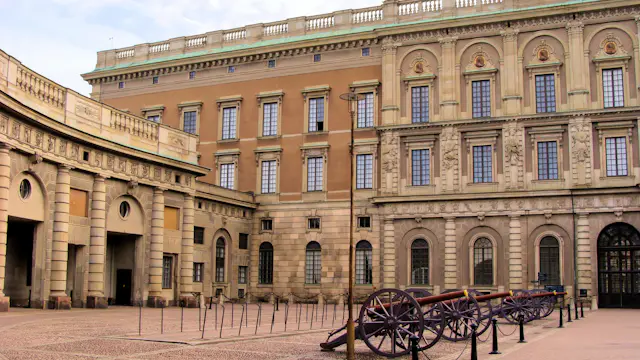
Amassive structure with more than 600 rooms on 11 levels, Kungliga Slottet (the Royal Palace) dominates the north end of Gamla Stan. The official residence of the Swedish monarch, the palace is both a working government building and an important historical site with fine baroque and rococo interiors and furnishings that reflect the shifting tastes of nearly 400 years of royal occupants.
History of Kungliga Slottet
Around the mid-1200s, Birger Jarl, the powerful earl credited with founding Stockholm, erected a stone fortress on the site of the present royal palace. Under the Vasa rulers of the 16th and 17th centuries it developed into a magnificent Renaissance palace that became known as Tre Kronor for the three gilded crowns placed atop the main tower in 1588.
Following the Thirty Years War, which ended in 1648, Sweden entered an era of great power. Extensive rebuilding of the palace began in 1692 under the royal architect Nicodemus Tessin the younger, who gave the northern wing its current baroque appearance.
On 7 May 1697, a devastating fire broke out, destroying everything except the newly renovated north wing. Six weeks later Tessin presented designs for a new palace that he estimated would take six years to build. In fact, it would take nearly six decades before the royal family was finally able to take up residence.

Museum Tre Kronor
Remnants of the original Tre Kronor palace can still be seen in the north wing, where Tessin simply covered over the medieval walls and towers as he erected his new baroque facade. Start your visit here to follow the palace’s history in chronological order.
Entering Museum Tre Kronor from Slottskajen, you pass through walls 5m (more than 16ft) thick that have stood since the 14th century. Inside, exhibits trace the development of Tre Kronor from defensive fortress to Renaissance palace, using models and objects rescued from the fire.
The Royal Apartments
The Royal Apartments consist of a series of grand rooms used for royal receptions, gala dinners, cabinet meetings and other official state business, as well as more intimate living chambers. Every royal resident has left a mark on the interior design, beginning with King Adolf Fredrik and Queen Lovisa Ulrika, who moved into the newly completed palace in December 1754. They resided in the 14 rooms now called the Bernadotte wing after the present dynasty, which has occupied the throne since 1818. The last to live in these apartments were King Oscar II and Queen Sofia, whose portraits hang in the main gallery along with those of other Bernadotte family members.
The nine rooms comprising the State Apartments include the bedchamber where Gustav III died in 1792, two weeks after being shot at a masquerade ball; Karl XI’s Gallery, a gilded chamber modeled after the Hall of Mirrors at Versailles; and the Don Quixote Room, with walls covered in 18th-century tapestries depicting scenes from the classic novel by Miguel Cervantes. Another highlight is the Hall of State with Queen Kristina’s silver throne, a gift for her coronation in 1650.
Kungliga Slottet is open year round, except for major holidays. Parts of the palace may be closed at other times due to state functions; check the website for the latest details.
The Royal Treasury
The monarchy’s greatest treasures are kept in underground vaults accessed through an entrance off Slottsbacken. They include crowns, swords and other symbols of state made for various royals in the 16th and 17th centuries.
The oldest items are the royal regalia, which include two swords of state belonging to Gustav Vasa, who came to power in 1523, and a jewel-studded gold crown, orb, scepter and key of state made for his son Erik XIV in 1561.
The last coronation held in Sweden was King Oscar II’s in 1873. His son Gustaf V inherited the throne in 1907 but declined to be formally crowned. Nowadays the regalia are used symbolically whenever a new monarch ascends to the throne, and at ceremonies such as royal baptisms, weddings and funerals.
Also on display is a silver baptismal font from 1696 that’s still used today, most recently in 2016 for the baptism of Prince Oscar, the son of Crown Princess Victoria and Prince Daniel.
Gustav III’s Museum of Antiquities
Located in the northeastern wing of the palace, this museum displays ancient sculptures collected by Gustav III during an extended trip to Italy in the 1780s. The main gallery’s star attraction is a sculpture of Endymion, a beautiful mortal who was the lover of the moon goddess, Selene. Statues of the nine muses and various Roman gods and goddesses line both sides of the gallery. A second, smaller gallery houses a collection of Roman portrait busts.
The museum is open from mid-May to mid-September.

The Royal Chapel
Although there has been a church at the palace since the 13th century, the present chapel was designed by Nicodemus Tessin and completed by architect Carl Hårleman as part of the rebuilding of the palace. The previous chapel had been inaugurated just five months before being destroyed in the fire.
The chapel is open to visitors during the summer.

The Changing of the Guard
If you can time your visit accordingly, don’t miss the changing of the guard ceremony, which takes place in the outer palace courtyard daily at 12.15pm (1.15pm on Sundays and holidays) and lasts approximately 40 minutes.
Every day from late April through August, the royal guards march or ride in formal procession through the streets of central Stockholm to the palace, an impressive sight in their blue uniforms and glittering pointed helmets. In September and October the parade takes place on Wednesdays, Saturdays and Sundays. Details of the route and timing are listed on the Swedish Armed Forces website.
Tickets and other practicalities
A single ticket costs 140 SEK ($16) for adults and 70 SEK ($8) for children ages 7-17. and includes access to all the attractions in the Royal Palace complex, including Museum Tre Kronor, the Royal Apartments, the Royal Treasury, the Royal Chapel and Gustav III’s Museum of Antiquities. Tickets are available at the entrance and online in advance. Combination tickets are available for the palace and nearby Riddarholmskyrkan, the medieval church where almost all Swedish royals until 1950 are buried.
Guided tours of the Royal Apartments cost 30 SEK ($3.50) plus regular admission and are available in English at 10.30am and 1.30pm, with an additional English-language tour at 3.30pm from June through August. There’s no extra charge for the tour for children under 18 (regular admission tickets are required). Tours of the Royal Treasury in English take place at 2.30pm daily. Free audio guides to the Bernadotte Apartments and Gustav III’s Museum of Antiquities can be downloaded onto a smartphone or borrowed on site.
During the COVID-19 pandemic only the Royal Apartments are open to visitors, and tickets are timed. There are no guided tours, and only the download option is available for audio guides. The changing of the guard ceremony and parade are also not taking place during the pandemic.
The Royal Palace also houses Livrustkammaren (the Royal Armoury), a free museum that traces the history of the Swedish monarchy since 1523 through armor, clothing and other items that once belonged to various royals. It’s accessible through a separate entrance off Slottsbacken.
Switzerland
Stiftsbibliothek
![SWITZERLAND - JANUARY 01: Library of the monastery St. Gallen, Switzerland. 2000 hand writings, 1635 incunable and almost 100.000 books. The library was built between 1758 and 1767 und richly decorated. (Photo by Imagno/Getty Images) [St. Gallen, Schweiz: Ehemaliges Benediktiner-Kloster. Stiftsbibliothek mit 2000 Handschriften, 1635 Wiegen- und Fruehdrucken (Inkunabeln) und schliesslich 100.000 Buechern, 1758-1767 erbaut und kunstvoll ausgestattet. Stift St. Gallen: 612 Zelle des hl. Gallus, eines Gefaehrten Columbans, 719 wird durch den hl. Otmar das Kloster errichtet, das 747 die Regel Benedikts annimmt, 1805 saekularisiert.]](https://lp-cms-production.imgix.net/2021-08/Stiftsbibliothek_St_Gallen.jpg?auto=format&q=40&w=640&ar=16%3A9&fit=crop&crop=center&fm=auto)
Imagno / Getty Images
If the greatest masterpieces on earth are wrought for the glory of God, St Gallen’s Stiftsbibliothek (Abbey Library), is like a living prayer. Religious or not, you can’t help but look up to the heavens and fall silent as you step across its creaking wood floor, breathe in the scent of 1000 years of parchment, ink, patience and piety, and cast a careful eye across its stucco-encrusted ceiling, biblical frescoes, playful putti (cherub-like figures), magnificent globe and shelves lined with 170,000 beautiful leather-bound books. Some of the world’s most precious and elaborate medieval manuscripts are hidden here, occasionally dusted off for exhibitions for all to admire.
Once the beating heart of one of Europe’s finest Benedictine monasteries, the library gave St Gallen a solid foot up the celestial ladder in the Middle Ages. Today, this wondrous space forms the centerpiece of the Unesco World Heritage Stiftsbezirk (Abbey District). If you make the pilgrimage to just one abbey in Switzerland, this really should be it.

History of Stiftsbibliothek St Gallen
Local lore has it that St Gallen began with a bush, a bear and an Irish monk who should have watched where he was going. In AD 612, as the tale goes, itinerant monk St Gall (Gallus), one of the twelve companions of Saint Columbanus, was on a mission from Ireland to the continent. He fell into a briar (bush) and considered the stumble a calling from God. After a fortuitous encounter with a bear, in which he persuaded it to bring him a log, take some bread in return and leave him in peace, he used the log to begin building the simple hermitage that would one day evolve into St Gallen’s cathedral.
Whether or not you believe the bit about the briar and the bear, St Gall was instrumental in sewing the seeds of what would blossom into one of the world’s greatest Benedictine abbeys, founded by Abbot Otmar in 747 AD. The city of St Gallen sprang up around the abbey and developed into one of Europe’s most important intellectual and religious centres.
In the Middle Ages, monks flocked here from afar to pray, read, study scriptures and devote years to copying and illustrating manuscripts; a painstaking, solitary act that required a patient hand and a peaceful heart. Arts, letters and sciences flourished here and the library grew to impressive proportions, with its manuscripts inspiring accomplished artists and leading literary scholars: from Notker Balbulus to Ekkehart IV.
The abbey survived the threats and fires that ravaged the town over the centuries, and the turbulent times of the Reformation. Based on plans by star architect of the baroque age, Peter Thumb of Vorarlberg, the new abbey was built in the mid 18th century, just before the abbey lands were secularised and the abbey itself dissolved in 1805. The former abbey church became a cathedral in 1848, and the whole site, including the Stiftsbibliothek, was granted Unesco World Heritage status in 1983.

Architecture of Stiftsbibliothek St Gallen
A master of the exuberant rococo style, Peter Thumb of Vorarlberg didn’t do things by halves. Completed just before his death in 1767, the library was his parting gift to the world and magnum opus: a swirling confection of curling stucco and frescoes depicting the early church councils. The plump putti (cherub-like figures) in the window niches embody professions – poet and doctor, botanist and carpenter, musician and painter, astronomer and architect.
A balcony unfurls gracefully along the upper level, with 34 windows allowing a painterly light to stream in even on overcast days. No expense was spared on the materials, with bookshelves and bookcases carved out of exquisite walnut and cherry wood. Above the entrance, a pair of gilded cherubs hold up a sign saying psyché iatreio, the Greek for “sanctuary of the soul” or “soul pharmacy”.

Treasures of Stiftsbibliothek St Gallen
Books & manuscripts
Only 30,000 of the total collection of 170,000 volumes are in the library at any one time, arranged into special exhibitions. Among these are 1650 incunabula (books printed before 1501). Of the library’s 2100 precious manuscripts – some of which are true works of art and remarkably well preserved – just a handful are on display. The oldest manuscript, dating to 760, was penned by the monk Winithar, who complained about not having sufficient parchment.
Among its other literary treasures are the 9th-century Cod Sang 555, the earliest portrait of St Columba, a version of The Rule of St Benedict, the cornerstone of medieval monastic life, and Manuscript B of the Nibelungenlied (The Song of the Nibelungs), an epic poem written around 1200.
St Gallen globe
Igniting the adventurous spirit in any born traveler, the library’s earth and celestial globe is a beauty, more than two metres high, replete with naturalistic detail and still incomplete as some countries were yet to be discovered. The 16th-century original was stolen more than 400 years ago, so what you see now is a very convincing replica.
Vaulted cellar
For more insight into St Gall and his life and work, delve into the vaulted cellar. This houses the Lapidarium, which showcases a collection of Carolingian, Ottonian and Gothic sculpture from the former church on the site. There’s also some interesting background, albeit mostly in German, about the art of illustration. The standout is the late 9th-century Evangelium Longum, an illuminated manuscript with an intricately carved ivory cover bearing the hallmark of the monk and artist Tuotilo.
Egyptian mummy
Hailing from the Deir el-Bahri Temple Complex, Shepenese, the library’s ancient Egyptian mummy, dates to 700 BC and was given as a gift to the mayor of St Gallen in 1820, together with two wooden sarcophagi. Shepenese was the daughter of a priest and lived at the start of the Saite Dynasty (672 to 525 BC).
Dom St Gallen
Taking the stylistic leap from baroque to classicism, St Gallen’s twin-towered, mid-18th-century cathedral is only slightly less ornate than the world-famous library nearby. A riot of mint-green stucco and rose marble, the cathedral dances with dark, stormy frescos and cherubs and saints gazing down from heavenly clouds. The cupola (ceiling dome) shows a vision of paradise with the Holy Trinity at the centre. To experience the cathedral at its uplifting best, visit during one of the Dommusik concerts.

Exploring St Gallen
While you’re in St Gallen, factor in time for a stroll around the Altstadt (Old Town), where many houses are embellished with Erker (oriel bay windows), especially around Gallusplatz, Spisergasse, Schmiedgasse and Kugelgasse. Locals have totted them all up and reckon there are 111. Some bear the most extraordinary timber sculptures – a reflection of the wealth of their one-time owners, mostly textile barons.
Need to know
Multilingual audio guides are available at the abbey library and exhibition space counters, as are felt slippers, which are obligatory to protect the parquet floor. Photography is strictly forbidden (even without flash). Included in the cost of the abbey ticket, public 45-minute guided tours in German depart at 2pm daily; no booking is required.

This is the big one. At 3454m above sea level, Jungfraujoch is Europe’s highest train station: a once-in-a-lifetime trip, with views of the deeply crevassed Aletsch Glacier and a never-ending ripple of sky-high Alpine peaks to make you gasp out loud.
A little underwhelmingly for train enthusiasts, the station itself is actually located inside the mountain, in a tunnel of sorts. But (but!) the ride to reach it passes some magnificent mountain scenery, with passengers glued to the window as the tracks curl past spruce forests and eyrie-like villages, meadows sprinkled with a confetti of wildflowers, and mountains that glow pearl white in winter like a scene from a snowglobe. The higher you go, the more dramatic the journey gets, shouldering up to glinting glaciers and the legendary triple act of Eiger (3970m), Mönch (4107m) and Jungfrau (4158m). Upon completing the journey, passengers disembark to explore the snowy surrounds.
We won’t lie – Jungfraujoch is no secret and it gets swamped in high season, but with some cunning planning you can give the madding crowds the slip. Stay overnight at the Mönchsjochhütte, stomp through fresh powder snow in quiet exhilaration, or take the first train to see sunrise pinken the peaks one by one, and you too will feel the magic.

History of Jungfraujoch
Only the Swiss had the guts more than a century ago to think you could blaze right through rock and ice and bore through the heart of Eiger to a glaciated peak 3454m high. A masterpiece of engineering in the truest sense, the railway has known few rivals since it launched on 1 August 1912, taking some 3000 workers 16 years to complete.
If the journey seems audacious now, just think of how it seemed back then. Many railway pioneers had flocked to the region and proposed ways to connect the highest peaks. But it was Adolf Guyer-Zeller who came up with the masterplan for the electrically operated cog railway, factoring in several stops en route to let passengers enjoy the views.
The work on the railway began in earnest in 1896 and was carried out without machinery – just shovels, pickaxes and a hell of a lot of hard graft. The construction was not without its hitches, among them the sudden death of Adolf Guyer-Zeller in 1899, and the accidental explosion of 30 tons of dynamite in 1908. But these setbacks didn’t stop Adolf’s dream from becoming a reality.

What to do at Jungfraujoch
Sphinx observation deck
The icy wilderness of swirling glaciers and 4000m peaks that unfolds up top is beautiful beyond belief. Sidling up to the crag-perching Sphinx, one of the world’s highest astronomical observatories, Jungfraujoch’s observation deck commands grandstand views of the moraine-streaked, 23km-long tongue of the Aletsch Glacier, the longest glacier in the Alps and a Unesco World Heritage Site. The views across a sea of shimmering white peaks stretch as far as the Black Forest in Germany on cloudless days.
Snow Fun Park
Even when there’s dazzling sunshine at lower elevations, there is guaranteed snow up at Jungfraujoch. The Snow Fun Park ramps up the adventure. Here you can whizz across the frozen plateau on a flying fox (zip line), dash downhill on a sled or snow tube, or pound the powder with some gentle skiing or boarding (day passes available).
Ice Palace
Tunnels of ice polished as smooth as cut glass lead through the Ice Palace at Jungfraujoch, which offers a frosty reception at -3°C. Mountain guides wielding saws and pick-axes carved the chambers out of solid ice in the 1930s. Now they are adorned with frozen sculptures of bears, ibexes and eagles.
Aletsch Glacier
Jungfraujoch commands a phenomenal view of the largest glacier in the Alps: the 23km Aletsch Glacier, which blazes a trail through peaks hovering around the 4000m mark. The glacier is the showpiece of the Swiss Alps Jungfrau-Aletsch Unesco World Heritage Site. From late June to early October, Grindelwald Sports offers two-day hikes across the glacier, led by experienced mountain guides.

Make it happen
When to go
Going early, going late or going out of season is the trick to avoiding the crush at Jungfraujoch. It’s well worth getting one of the first or last trains to see the peak when it’s a shade more peaceful. Staying the night at Mönchsjochhütte lets you experience Jungfraujoch when the crowds have subsided. Good weather is essential for the journey; check the website for current conditions. Don’t forget to take warm clothing, sunglasses and sunscreen, as there’s snow and glare up here all year.
The journey to Jungfraujoch
The recent arrival of the tri-cable Eiger Express gondola, linking Grindelwald to Eiger Glacier station in 15 minutes, has seriously slashed journey times to Europe’s highest station. The gondola swings so close to Eiger’s ferocious north face that it feels as though you’ll slam into it.
Trains from Interlaken Ost follow two different routes to Jungfraujoch: one via Lauterbrunnen, Wengen and Kleine Scheidegg (2¼ hours), the other via Grindelwald with the Eiger Express (1½ hours). From late May to October, the first train from Interlaken to Jungfraujoch departs at 6.35am, and the latest train leaving Jungfrau is 5.47pm. Seats can be reserved for a nominal extra charge.

Where to stay & eat
The crowds fade and the mountains rear up around you in all their frozen wonder when you hike through the snow to Mönchsjochhütte, 2.2km east of Jungfraujoch (around 45 minutes on foot). Perched at a giddy 3650m above sea level and open from mid-March to mid-October, this is Switzerland’s highest serviced mountain hut and a firm favourite among hardcore rock climbers, glacier hikers and ski tourers, not to mention mere mortals just up here for the view.
The deal is simple: you’ll sleep in a basic dorm, wash in meltwater and eat hearty mountain meals. The clatter of karabiners (climbing hooks) can be heard at ungodly hours (light sleepers will want earplugs) and breakfast is served from 2am to 7.30am, which is just as well because you really wouldn’t want to miss this sunrise…
Money saving passes
Get yourself a Jungfrau Travel Pass for speedy access to the mountains via a brilliant network of trains, funiculars and cable cars. Available for three to eight days, the pass offers unlimited travel on mountain railways in the region, plus discounts on tickets to Jungfraujoch. From mid-April to late November, the three- to eight-day Top of Europe Pass covers the whole shebang: unlimited transport within the region and as many journeys as you like to Jungfraujoch and back. Kids pay just a fraction of the adult price.
Germany
Museumsinsel

Walk through ancient Babylon, meet an Egyptian queen, clamber up a Greek altar or be mesmerized by Monet’s ethereal landscapes. Welcome to Museumsinsel (Museum Island), a one-of-a-kind collection of five grand museums capturing diverse cultures and historical periods through rare artifacts.
Museumsinsel is situated on the northern half of Spreeinsel, a small island in the River Spree, where Berlin’s settlement began in the 13th century. Spread across five buildings constructed under Prussian rulers, Berlin’s most important treasure trove spans 6000 years’ worth of art, artifacts, sculpture and architecture from Europe and beyond.
The first facility to open was the Altes Museum, which presents Greek, Etruscan and Roman antiquities. Behind it, the Neues Museum showcases the Egyptian collection, most famously the Nefertiti Bust, and also houses the Museum für Vor- und Frühgeschichte (Museum of Pre- and Early History).
The temple-like Alte Nationalgalerie focuses on 19th-century European art, while the island’s top drawcard, the Pergamonmuseum, displays monumental architecture from ancient worlds, including the stunning Ishtar Gate from Babylon. Last but not least, the Bode-Museum, at the island’s northern tip, is famous for its medieval sculptures.
In addition to the museums, Museumsinsel is also home to the lovely Lustgarten park and Berliner Dom (Berlin Cathedral).

The history of Museumsinsel
Each of Museumsinsel’s five buildings were designed by different architects, who were commissioned by a succession of Prussian kings between 1830 and 1930.
The Altes Museum (originally known as the Königliches Museum) was the first cultural facility to open on Museumsinsel in 1830. It is considered the most mature work by Prussia’s most important architect, Karl Friedrich Schinkel. Dedicated to Enlightenment ideals of furthering art and science, the museum made significant historical collections and artworks – including Old Masters paintings, prints and drawings – publicly accessible for the very first time.
The Neues Museum (New Museum) was conceived as an extension for the overflowing Königliches Museum, which was struggling to display its growing number of artifacts. It was designed in neoclassical and Renaissance Revival styles and opened in 1855. As a consequence, the existing Königliches Museum was eventually renamed to the Altes Museum (Old Museum).
By 1876, the Alte-National Galerie, which takes the form of a traditional Greek temple, opened its doors to display paintings and sculptures donated by a prominent banker. This was followed by the opening of the neo-baroque Kaiser Friedrich Museum, today’s Bode-Museum, in 1904, and the Pergamonmuseum in 1930. Exactly 100 years after construction began on the original museum, Museumsinsel was finally complete.
World War II, however, brought a turbulent period to the Museumsinsel. Bombings destroyed entire sections of buildings and bullet holes pockmarked facades. The worst hit was the Neues Museum, which, as a consequence, was disused until the 2000s.
In the 1950s and 1960s, the Altes Museum and Alte-Nationalgalerie were renovated and reopened, along with the Pergamonmuseum in 1959 (although a thorough restoration only began in 2013 and remains ongoing). However, in a divided city, the museum complex fell on the East Berlin side of the wall, making the facilities difficult to access for those in West Berlin during the years following the war.

In the direct aftermath of the fighting, items from the museums were also taken as war trophies, notably by USSR forces. Most items have since been returned, but some still remain outside Germany. The Trojan Gold (a collection of gold from ancient Troy), for example, remains on display to this day at the Pushkin Museum of Fine Arts in Moscow.
After the reunification of Germany in 1990, it was decided that the complex should be restored and renovated for contemporary times. In 1999, the government developed what was termed the “master plan” – a decade-long, billion-euro project to transform Museumsinsel into the modern spectacle that greets visitors today. That same year, Museumsinsel was declared a Unesco World Heritage Site.
Besides overall restoration work, the master plan included the reopening of the Neues Museum (which had remained closed since the war) in 2009, with a brand-new visitor center and art gallery – both designs were spearheaded by British “starchitect” David Chipperfield. More recently, the Humboldt Forum, encompassing the Ethnological Museum of Berlin and the Museum of Asian Art, opened in late 2020 in the Berlin Palace opposite the Lustgarten park.
Like many large historical museums in major European cities, the facilities on Museumsinsel face a growing backlash over displaying ancient artifacts taken from other countries following historical wars, expeditions and invasions. To aid in addressing this issue, a handful of items, including the 3000-year-old Sphinx of Hattusa from Turkey (formerly on display in the Pergamonmuseum), have been returned to their country of origin. In addition, in 2021 a new government initiative, MuseumsLab, was launched, with an aim of decolonizing Germany’s museums and “fostering international cooperation”.

Plan your visit
Museumsinsel is one of Berlin’s busiest areas. The grounds, indoors and outdoors, are always bustling with school children, buskers and tour groups. As such, use common sense and be aware of potential pickpockets.
The most budget-friendly way to visit the different museums is by getting the WelcomeCard for Museum Island. For one price, it grants access to the island’s five museums as well as free public transport in central Berlin over three consecutive days. Alternatively, the Museum Pass Berlin offers entry into Musueminsel and some 30 other museums such as the Deutsches Historisches Museum (German Historical Museum) and Jüdisches Museum (Jewish Museum).
Getting there
Museumsinsel is easily accessible by public transport. The U5 line stops right outside at Unter den Linden station. Museumsinsel is also a short walking distance from the S-Bahn stations Friedrichstraße and Hackescher Markt. Trams M1 and 12 will take you to nearby Kupfergraben, while buses 100 and 200 stop at the Lustgarten on Unter den Linden.
Greece Mystras

Spread over a steep mountainside and surrounded by verdant olive and orange trees, this former Byzantine capital and fortified city is the single most compelling set of medieval ruins in Greece. Treading the cobblestones, worn smooth by centuries of footsteps, you can walk with the ghosts, ducking into the ruins of palaces, monasteries and churches, most dating from between 1271 and 1460.

History
The Frankish leader Guillaume de Villehardouin built the fortress in 1249. When the Byzantines won back the Morea from the Franks, Emperor Michael VIII Palaeologos made Mystras its capital and seat of government. Settlers from the surrounding plains began to move here, seeking refuge from the invading Slavs. From this time until Dimitrios surrendered to the Turks in 1460, a despot of Morea (usually a son or brother of the ruling Byzantine emperor) lived and reigned at Mystras.
While the empire plunged into decline elsewhere, Mystras enjoyed a renaissance. Gemistos Plethon (1355–1452) founded a school of humanistic philosophy here and his enlightened ideas, including the revival of the teachings of Plato and Pythagoras, attracted intellectuals from all corners of Byzantium. Art and architecture also flourished, as seen in the town’s splendid buildings and frescoes.
Mystras declined under Ottoman rule, but thrived again after the Venetians captured it in 1687 and developed a flourishing silk industry. The population swelled to 40,000. The Turks recaptured the town in 1715 and from then it was downhill all the way; it was burned during the Orlov uprising in 1770 and Ibrahim Pasha torched what was left in 1825.
By the time of independence it was a largely abandoned ruin, and the refounding of nearby Sparta in 1834 contributed to the decline, though Mystras remained inhabited until 1953. Much restoration has taken place since the 1950s (and continues to this day) and in 1989 it was declared a Unesco World Heritage site.

Touring Mystras
At least half a day is needed to do justice to the ruins of Mystras. The site is divided into three interconnected sections – the kastro (the fortress on the summit), the hora (upper town) and the kato hora (lower town). The fortress (upper) gate is between the kastro and the hora, while the lower gate is at the bottom of the kato hora.
The following route takes in some of the site’s top highlights:
The fortress
From the upper-entrance ticket office, the right-hand path (signposted ‘Castle’) leads up to the fortress; it’s a 10-minute ascent. The fortress was built by the Franks and extended by the Turks; the views of the Lakonia plain, spread out below, are nothing short of fantastic.
Agia Sofia
The left-hand path descends from the ticket office to Agia Sofia, which served as the palace church and burial ground for several emperors’ wives; some frescoes survive in a side chapel, including a well-preserved Birth of the Virgin Mary over the doorway. Steps descend from here via the church of Agios Nikolaos to a T-junction.
Convent of Pantanassa
Head right, through the Monemvasia Gate, the former entrance to the lower town, and on to the well-preserved 14th-century Convent of Pantanassa. Featuring a beautifully ornate stone-carved facade, it is still maintained by nuns, Mystras’ only inhabitants besides the motley crew of stray cats. The convent is an elaborate, perfectly proportioned building that’s never overstated.
The exquisite, richly coloured 15th-century frescoes here are among the finest examples of late-Byzantine art. Look out for the tiny stamped silver and gold votive offerings beneath the large icon of the Virgin. You’ll find images of eyes, ears, legs, arms, breasts, babies, husbands and wives stamped onto these small tablets, depending on the problems for which the faithful have come seeking aid. It’s a continuation of a long tradition going back to Classical Greece and beyond. The nuns may provide wraps to cover your legs.

Monastery of Perivleptos
The path continues down, via an impressive mansion house, to the exceptional Monastery of Perivleptos, which is built into a rock and tucked away in a pine grove at the far end of the site. Inside, the 14th-century frescoes, preserved virtually intact, equal those of Pantanassa. It’s an extraordinary place. The marble-floored church has a dome in whose centre you’ll find the Pantokrator (depiction of Christ as the universal, all-powerful ruler) surrounded by the Apostles, and the Virgin flanked by two angels.
Mitropolis (Cathedral of Agios Dimitrios)
Continue down towards the Mitropolis (Cathedral of Agios Dimitrios), a complex of buildings enclosed by a high wall. The original church was built in the 1200s, but was greatly altered in the 15th century. The church stands in an attractive courtyard surrounded by stoas and balconies.
Its impressive ecclesiastical ornaments and furniture include a marble iconostasis, an intricately carved wooden throne, and a marble slab in the floor featuring a two-headed eagle (the symbol of Byzantium) located on the exact site where the last Byzantine emperor, Constantine XI, was crowned in 1449 (he died in battle during the fall of Constantinople in 1453). The church also has some fine frescoes. Exhibits at the small but modern museum upstairs include fragments of ancient cloth, buttons, jewellery and other everyday items.

Tickets and other practicalities
The ticket price to enter Mystras is €12. Entry to the site is free every first Sunday from November 1st to March 31st.
Aim to start early in the morning to beat the tour groups, wear comfortable shoes and bring water (you can refill at the convent).
France Eiffel Tower

There are different ways to experience the Eiffel Tower, from a daytime trip or an evening ascent amid twinkling lights, to a meal in one of its restaurants. And even though some seven million people come annually, few would dispute that each visit is unique – and something that simply has to be done when in Paris.
History
Named after its designer, Gustave Eiffel, the Tour Eiffel was built for the 1889 Exposition Universelle (World’s Fair). It took 300 workers, 2.5 million rivets and two years of nonstop labor to assemble. Upon completion, the tower became the tallest human-made structure in the world (324m) – a record held until the 1930 completion of New York’s Chrysler Building. A symbol of the modern age, it faced opposition from Paris’ artistic and literary elite, and the ‘metal asparagus’, as some snidely called it, was originally slated to be torn down in 1909. It was spared only because it proved an ideal platform for the transmitting antennas needed for the newfangled science of radiotelegraphy.
Sporting six different colors throughout its lifetime, the tower has been painted red and bronze since 1968. Work is underway to strip the previous 19 coats and apply the yellow-brown shade originally conceived by Gustave Eiffel, giving it a new golden hue in time for the 2024 Olympics.

First floor: cafe and souvenir shop
Of the tower’s three floors, the 1st (57m) has the most space but least impressive views. The glass-enclosed Pavillon Ferrié houses an immersion film along with a small cafe and souvenir shop, while the outer walkway features a discovery circuit to help visitors learn more about the tower’s ingenious design. Check out the sections of glass flooring that provide a dizzying view of the ant-like people walking on the ground far below. This level also hosts the restaurant 58 Tour Eiffel. The 1st floor’s commercial areas are powered by two sleek wind turbines within the tower.
Second floor: Le Jules Verne restaurant
Views from the 2nd floor (115m) are the best – impressively high but still close enough to see the city below. Telescopes and panoramic maps pinpoint locations in Paris and beyond. Story windows give an overview of the lifts’ mechanics, and the vision well allows you to gaze through glass panels to the ground. Also up here are toilets, a souvenir shop, a macaron bar, and Michelin-starred restaurant Le Jules Verne.
Top floor: Champagne bar and ‘secret apartment’
Views from the wind-buffeted top floor (276m) stretch up to 60km on a clear day, though at this height the panoramas are more sweeping than detailed. Celebrate your ascent with a glass of bubbly (€13 to €22) from the Champagne bar (open 10.15am to 10.15pm). Afterwards peep into Gustave Eiffel’s restored top-level office, otherwise known as the ‘secret apartment’, where lifelike wax models of Eiffel and his daughter Claire greet Thomas Edison.

Tours, tickets and other practicalities
Visitors must pass through security at the bullet-proof glass barriers surrounding the tower’s base. The two entrances to the glass enclosure are on avenue Gustave Eiffel; the two exits are on quai Branly.
Ascend as far as the 2nd floor (either on foot or by lift), from where there’s a separate lift to the top floor (closed during heavy winds). Pushchairs must be folded in lifts and bags or backpacks larger than aeroplane-cabin size aren’t allowed. Note that the top floor and stairs aren’t accessible to people with limited mobility.
Pre-purchasing tickets online gives you an allocated time slot and means you only have to queue for security. Print your ticket or show it on your phone. If you can’t reserve your tickets ahead of time, expect lengthy waits for tickets in high season.

Stair tickets can’t be reserved online. Buy them at the south pillar, where the staircase can also be accessed: the climb consists of 360 steps to the 1st floor and another 360 steps to the 2nd floor.
If you have reservations for either restaurant, you’re granted direct post-security access to the lifts.
For the best view of the light show, head across the Seine to the Jardins du Trocadéro.Play Video
Did you know this about the Eiffel Tower?
How to get there
The nearest Metro stop is Bir Hakeim, while the nearest train station is Champ de Mars–Tour Eiffel (RER
Get 20% off our online shop.
Subscribe to Lonely Planet newsletters and promotions. Read our Privacy Policy.Sign Up
©k_samurkas/Shutterstock
There are different ways to experience the Eiffel Tower, from a daytime trip or an evening ascent amid twinkling lights, to a meal in one of its restaurants. And even though some seven million people come annually, few would dispute that each visit is unique – and something that simply has to be done when in Paris.
History
Named after its designer, Gustave Eiffel, the Tour Eiffel was built for the 1889 Exposition Universelle (World’s Fair). It took 300 workers, 2.5 million rivets and two years of nonstop labor to assemble. Upon completion, the tower became the tallest human-made structure in the world (324m) – a record held until the 1930 completion of New York’s Chrysler Building. A symbol of the modern age, it faced opposition from Paris’ artistic and literary elite, and the ‘metal asparagus’, as some snidely called it, was originally slated to be torn down in 1909. It was spared only because it proved an ideal platform for the transmitting antennas needed for the newfangled science of radiotelegraphy.
Sporting six different colors throughout its lifetime, the tower has been painted red and bronze since 1968. Work is underway to strip the previous 19 coats and apply the yellow-brown shade originally conceived by Gustave Eiffel, giving it a new golden hue in time for the 2024 Olympics.
First floor: cafe and souvenir shop
Of the tower’s three floors, the 1st (57m) has the most space but least impressive views. The glass-enclosed Pavillon Ferrié houses an immersion film along with a small cafe and souvenir shop, while the outer walkway features a discovery circuit to help visitors learn more about the tower’s ingenious design. Check out the sections of glass flooring that provide a dizzying view of the ant-like people walking on the ground far below. This level also hosts the restaurant 58 Tour Eiffel. The 1st floor’s commercial areas are powered by two sleek wind turbines within the tower.
Second floor: Le Jules Verne restaurant
Views from the 2nd floor (115m) are the best – impressively high but still close enough to see the city below. Telescopes and panoramic maps pinpoint locations in Paris and beyond. Story windows give an overview of the lifts’ mechanics, and the vision well allows you to gaze through glass panels to the ground. Also up here are toilets, a souvenir shop, a macaron bar, and Michelin-starred restaurant Le Jules Verne.
Top floor: Champagne bar and ‘secret apartment’
Views from the wind-buffeted top floor (276m) stretch up to 60km on a clear day, though at this height the panoramas are more sweeping than detailed. Celebrate your ascent with a glass of bubbly (€13 to €22) from the Champagne bar (open 10.15am to 10.15pm). Afterwards peep into Gustave Eiffel’s restored top-level office, otherwise known as the ‘secret apartment’, where lifelike wax models of Eiffel and his daughter Claire greet Thomas Edison.
Tours, tickets and other practicalities
Visitors must pass through security at the bullet-proof glass barriers surrounding the tower’s base. The two entrances to the glass enclosure are on avenue Gustave Eiffel; the two exits are on quai Branly.
Ascend as far as the 2nd floor (either on foot or by lift), from where there’s a separate lift to the top floor (closed during heavy winds). Pushchairs must be folded in lifts and bags or backpacks larger than aeroplane-cabin size aren’t allowed. Note that the top floor and stairs aren’t accessible to people with limited mobility.
Pre-purchasing tickets online gives you an allocated time slot and means you only have to queue for security. Print your ticket or show it on your phone. If you can’t reserve your tickets ahead of time, expect lengthy waits for tickets in high season.
Stair tickets can’t be reserved online. Buy them at the south pillar, where the staircase can also be accessed: the climb consists of 360 steps to the 1st floor and another 360 steps to the 2nd floor.
If you have reservations for either restaurant, you’re granted direct post-security access to the lifts.
For the best view of the light show, head across the Seine to the Jardins du Trocadéro.Play Video
Did you know this about the Eiffel Tower?
How to get there
The nearest Metro stop is Bir Hakeim, while the nearest train station is Champ de Mars–Tour Eiffel (RER C).
Details
- Address:Champ de Mars, 5 av Anatole France, 7e
- Phone:08 92 70 12 39
- Website:www.toureiffel.paris
- Hours:lifts & stairs 9am-12.45am mid-Jun–Aug, lifts 9.30am-11.45pm, stairs 9.30am-6.30pm Sep–mid-Jun
- Price:adult/child lift to top €25.90/13, lift to 2nd fl €16.60/8.30, stairs to 2nd fl €10.40/5.20
Europe